Also from Sydney: Public, for Whom? The struggle for public space →
Part III · Sydney, 2025
These homes were only worth saving when it came to who lived there.
The Australian terrace house has undergone both a physical and an aesthetic transformation, mirroring the changing cultural and class identities from generation to generation. Terrace houses at their conception were humble, tightly occupied residences designed with the intention of housing Sydney’s increasing blue collar workforce. With a practical purpose serving economic necessity by offering communal living, the dwelling units throughout the twentieth century fell prey to neglect and saw their lustre fade. By the 1960s and 1970s, gentrification and a surge of individual expression reshaped the properties. Political activism, conjoined with creative bohemians and young professionals, fuelled a new sense of life through preservation and reclamation thanks to cultural and financial investments. The stigma of decline waned, allowing the urban terraces to be embraced as architecturally charming alternatives to rudimentary suburban developments in western Sydney. This analysis will explore how the structures and creative features of terrace housing are reflective of the evolving culture, class, and generational distinctions of Sydney and further explore the significance of heritage. The examination of a range of commentaries, architectural historiographies, and archived photography will demonstrate how the terrace house has endured various socio-economic identities, but also been impacted by cultural clashes and appropriation defined by youth acquisition.
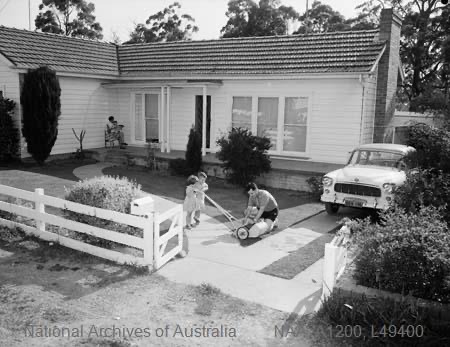
Terrace homes rose in appeal as life in the suburbs grew alien to many. One critic’s scathing description of the Australian suburban development found itself salient among an increasing population disdained by the architectural and cultural absence embedded within the detached home. Robin Boyd’s influential work, The Australian Ugliness (1960), critiques the built environment of the postwar period and the hollowness of sprawling developments. He categorises this as ‘featurism’ to articulate a broadly western trend to value superficial and unmeaningful designs across these swaths of homes. He adds that Australians have established environments that embody “uncommitted, tentative, temporary,” (Boyd 1960, 81) sentiments shaped by fleeting individualistic trends, rather than deeper coherence rooted in place or a collective identity. Boyd continues, “Thus he shapes his houses, industrial areas, towns and cities, often making them carefully, sometimes even beautifully in an indeterminate way, but almost always noncommittally” (Boyd 1960, 81). This critique captures a sentiment that suburbia, economically appealing, was missing a rich sense of history and authentic aesthetics. On the other hand, terrace houses promised a tight knit community, defined by history, and ease of access to the urban core. The homes are built in a uniform manner, a symbol of their working-class past, and evolved to be viewed with a sense of architectural coherence. They stood in stark contrast to the dispersed and isolated suburbia. Boyd’s condemnation of featurism serves as a prime example of the cultural shift that elevated the terrace home, offering an alternative to the placelessness, as a product of historical continuity and a rediscovering of aesthetic appeals. The other tenet of the terrace home that differed from the suburban home is that the terrace home has been able to convey the story of a place, whereas suburbia tells little about those who reside there. “It is thereby again through historical interpretation, and by valuing and highlighting the integral nature of such technologies within heritage space and settings, that the reciprocal relationships of obsolescent technological artefacts and their ghostly subjects might be affectively illuminated” (Lewi, 2023). The terrace has been preserved not for its functionality, a highrise would accommodate a greater population size, but rather because it has been able to serve as a symbol of Sydney, whether that may be its past of labour, decline, reinvention, or urban belonging. The suburban dwelling simply serves a purpose. Instead, the terrace home has meant different things to different people at different times.
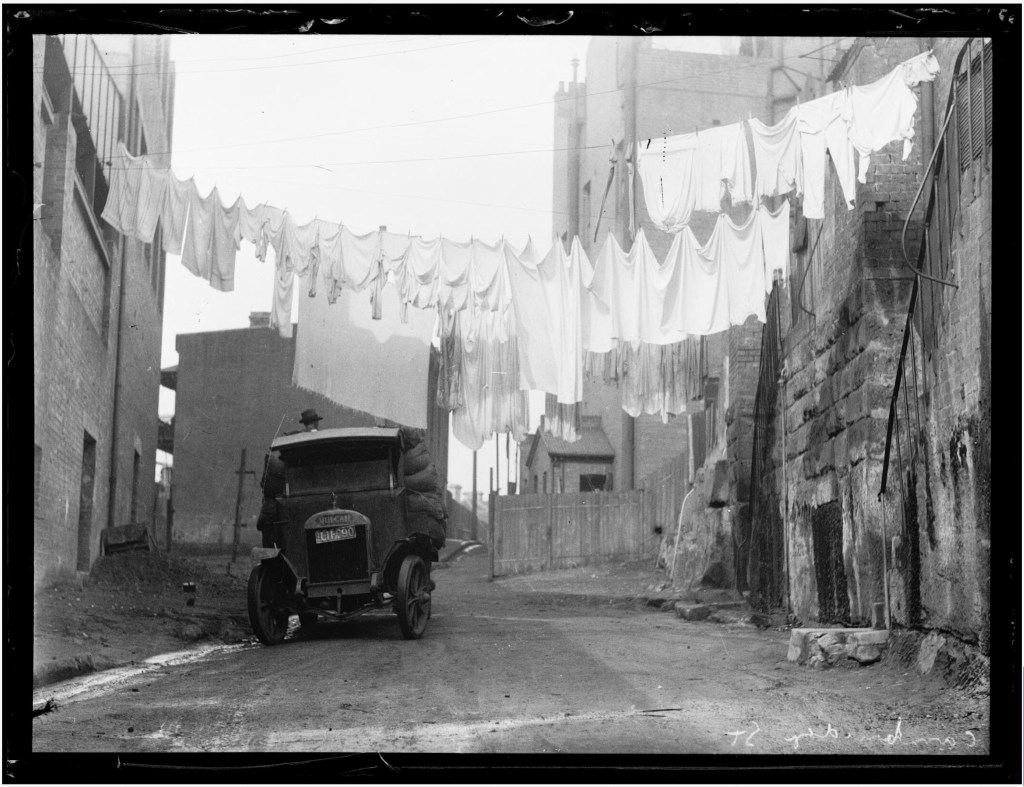
The Sun News Pictorial article titled In “Slum Terrace” (1946) displays a firsthand account of life in a neglected Australian terrace house, depicting how the once shining terrace homes, a space for the working class, had eventually symbolised urban neglect. The description details the terrace house as mouldy, damp, and gaping skirting boards, ill-fitted doors swung open by gusts of wind, causing rattling window frames. The description conflicts with the romantic notions of terrace housing which are popularised today, emphasising the overcrowding and structural decay which became common in inner Sydney. This is where the notion of the terrace home evolving into the slums, gaining a negative connotation. However the decline in aesthetics led to immense concern, prompting political reactions which came short at addressing the decline of the properties. As one historian described, “the Labor Government chose to support schemes which subsequent experience has shown only attacked the outside form of the problem – in this case the buildings themselves, rather than the basic cause of the problem, poverty and the inequitable distribution of income” (Spearritt, 1974). With this in mind, many of the government-led renewal projects prioritised an aesthetic restoration of the building, instead of seeking to improve the livelihoods of lower socioeconomic statuses. This misappropriated effort caused many locals and activists alike in neighbourhoods such as Paddington, most notably The Paddington Society, established in 1964, to make demands towards preservation and rehabilitation, rather than demolishing the terrace housing (The Paddington Society). These groups embraced the rich diversity of their neighbourhood; rather than aiming to force out migrant groups and youthful artists and students, they incorporated their interests alongside the interests of preserving the heritage of the area. They cultivated support from worker unions, tenants, migrants, and upper-class residents alike (Mowbray, 2013). These efforts helped restore a sense of dignity to the terrace, transforming it away from a symbol of poverty into a space that held a new found sense of cultural and architectural worth. This example showcases how governmental policy, class tension, and heritage intersect in the ever changing identity of the Australian terrace home.
Yet not all stories have been as fruitful for all classes residing in the houses. While gentrification has often been hailed for its revival of decaying urban landscapes, it also acts as a tool for the dispossession of the same groups who fought for its preservation, such as the working class, migrants, and racial minorities, notably Aboriginal people. The outcome of gentrification creates economic pressures on those who have long called these properties their homes, especially on renters, and does so by the inflation of property values. When more affluent populations relocate to areas where home prices are lower, landlords proceed to jack up the prices on their current tenants to meet the market demands. Tenants are priced out, those who can bear the cost remain, and more homes become vacant, allowing new buyers to slide in. One tenant in Sydney reflected on the transformation, “originally all the city stuff was all terrace houses, it was all working class. Now people renovate them and they’re trendy and they go up a lot in price and it pushes people that have probably lived in the city for generations further out to the western suburbs” (Rowland et al. 2011).
A striking example would be The Block in Redfern, an inner-city neighbourhood in the heart of Sydney which has witnessed struggles over issues of heritage and displacement. The Block has been a beacon for many Aboriginal people who relocated due to the abundance of services in the area. With the rise in Aboriginal residents, so too came struggles over land rights in order to reclaim the land to serve Aboriginal interests and needs (Rauscher and Momtaz, 2015). Private developers have gone so far as to demolish The Block, which featured many heritage terrace houses, so instead they can establish more profitable buildings that are appealing to higher economic statuses. The University of Sydney’s proximity has also posed problems for the area, as students locate themselves in the neighbourhood due to the closeness to the University. The Redfern terraces had a unique population makeup of Aboriginal people in the 1970s, but as time has progressed more affluent and young students have made their way in, furthering the displacement caused by increased housing costs. The evolution of neighbourhoods like Redfern and The Block reveal the conflicting forces at play pertaining to the image of the terrace home. On one hand they are lauded for their historical significance and heritage status, while simultaneously this desirability results in the displacement of the very populations which established their significance (Atkinson and Bridge, 61).
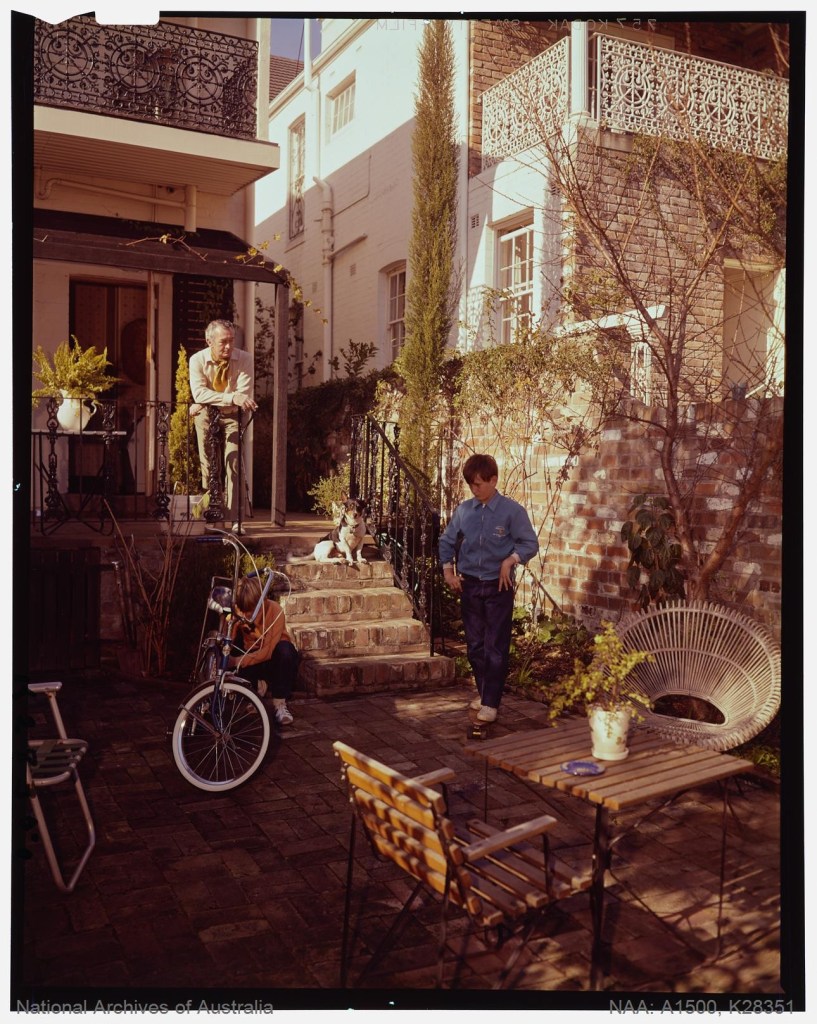
The idea of Sydney’s terrace homes being recognised as heritage has endured a long battle to where it stands today. Today they are celebrated for their character and the stories they tell about Sydney’s landscape. Yet the idea of these homes being designated as heritage or holding any historical significance was not a popular sentiment, as seen in this quotation: “Virtually no one in this era considered inner-city neighbourhoods of working-class terrace and row housing as having any historic significance. Some artists might have appreciated their ‘picturesque’ qualities but, as Fitzgerald claimed, it was their ‘pestilential’ underbellies that were of social moment and priority” (Freestone, 1999). The city saw these spaces as urban blights and a stain on the city: “Frank Walker described terraces in 1926 as a ‘terrible excrescence upon the face of the earth’. The town planning campaign, stressing the public health and social unrest problems associated with inner-city slum environments, only reinforced these perceptions” (Freestone, 1999). This gave way for destruction in order to achieve development that prioritised the needs of the upper class. If the buildings remained, they were eventually ransacked by gentrification efforts. The terraced homes stand in contrast to many of the buildings which have been preserved, notably from the colonial era. A piece in The National Trust quarterly denounced this unfair view of the terrace house: “When we look at the major surviving official buildings of Macquarie Street – the Convict Barracks, the old Rum Hospital – with their sober, simple brick and stone work, and their long, elegant runs of verandah, we are glad that one coherent sequence from colonial Sydney survived the wrecker’s ball. But if you turn to the western side of Macquarie Street, and see what has replaced its beautiful array of terraced town houses, and how little of the original fabric remains, it’s an occasion for grief as well” (Hughes, 1998). This is emblematic of the nasty bias in heritage conservation efforts. Grandiose buildings are allowed to stay, while simplistic and utilitarian structures are deemed as lacking any important purpose to the makeup of the city. It makes one wonder what truly is worth preserving and who gives it that worth. This, situated within the context of gentrification, is quite interesting: as the residents have become wealthier, the urge to save the terrace home from demolition intensifies, while when they are occupied by the lowest economic class, the consensus is that they must be ridded.
The Australian terrace home is not just simply an architectural feature speckled across Sydney, but rather a symbol of the constantly evolving values and lifestyles of the city’s inhabitants. From their inception as housing for the working class to their present day status as heritage buildings, the houses have endured the weight of changing economic periods, aesthetic preferences, and political whims. This showcases how the terrace home is never a thing of stagnation, but rather the product of the people who reside within, legislate over, and commodify via market forces. In making sense of it all, the terrace house remains both a place of perseverance and fatality. Many of the homes have dodged demolition and retain many aspects which made them unique in the first place. But they have become out of reach for the people they were designed for. As modern appeals shift, the terrace becomes desirable and accessible to a limited few, presenting obstacles for the working class. What emerges is the idea that these homes were only worth saving when it came to who lived there. The aesthetics may differ slightly, but the residents have dramatically changed, and so has the home’s worth and cultural prestige. And so, as the terraces continue to line the streets, we are reminded that what matters most in the history of Australian architecture is not so much the structures themselves, but rather who has come to call these places home.
References
Atkinson, Rowland, and Gary Bridge, eds. 2004. Gentrification in a Global Context. Taylor & Francis.
Atkinson, Rowland, Maryann Wulff, Margaret Reynolds, and Angela Spinney. 2011. Gentrification and Displacement: The Household Impacts of Neighbourhood Change. AHURI.
Boyd, Robin. 2010. The Australian Ugliness. Text Publishing Company.
Davison, Graeme. 2013. “The Suburban Idea and its Enemies.” Journal of Urban History 39 (5): 829–847. doi.org/10.1177/0096144213479307.
Freestone, Robert. 1999. “Preserving Sydney’s built heritage in the early twentieth century.” Australian Historical Studies 29 (112): 44–60. doi:10.1080/10314619908596086.
Hughes, Robert. 1998. “A History (Forgotten): Extracts from the Heritage Week Lecture.” Reflections, no. 3: 8–11, 13. search.informit.org.
Lewi, Hannah. 2023. “Kitchen Tours: Re-Interpreting the History of Gendered Labour and Technologies in the Home Through Four Australian Heritage Houses.” Fabrications 33 (2): 432–57. doi:10.1080/10331867.2023.2282292.
Mowbray, Robert. 2013. “Tenant activism: the emergence of the Tenants Union of NSW.” Around the House, 92nd ed. tenants.org.au.
The Paddington Society. n.d. “About Us.” Accessed June 5, 2025. paddingtonsociety.org.au.
Spearritt, Peter. 1974. “Sydney’s ‘Slums’: Middle Class Reformers and the Labor Response.” Labour History 26 (May): 65–81. jstor.org/stable/27508117.
University of Sydney, June 2025. AI was used in assessing the strength of the writing, providing corrections to aid fluidity and structure, and checking references, as disclosed at the time.

