Also from Sydney: The Terrace Houses of Sydney, Part I · Part II · Part III
Research · Sydney · May 2025
The struggle for public space in Sydney.
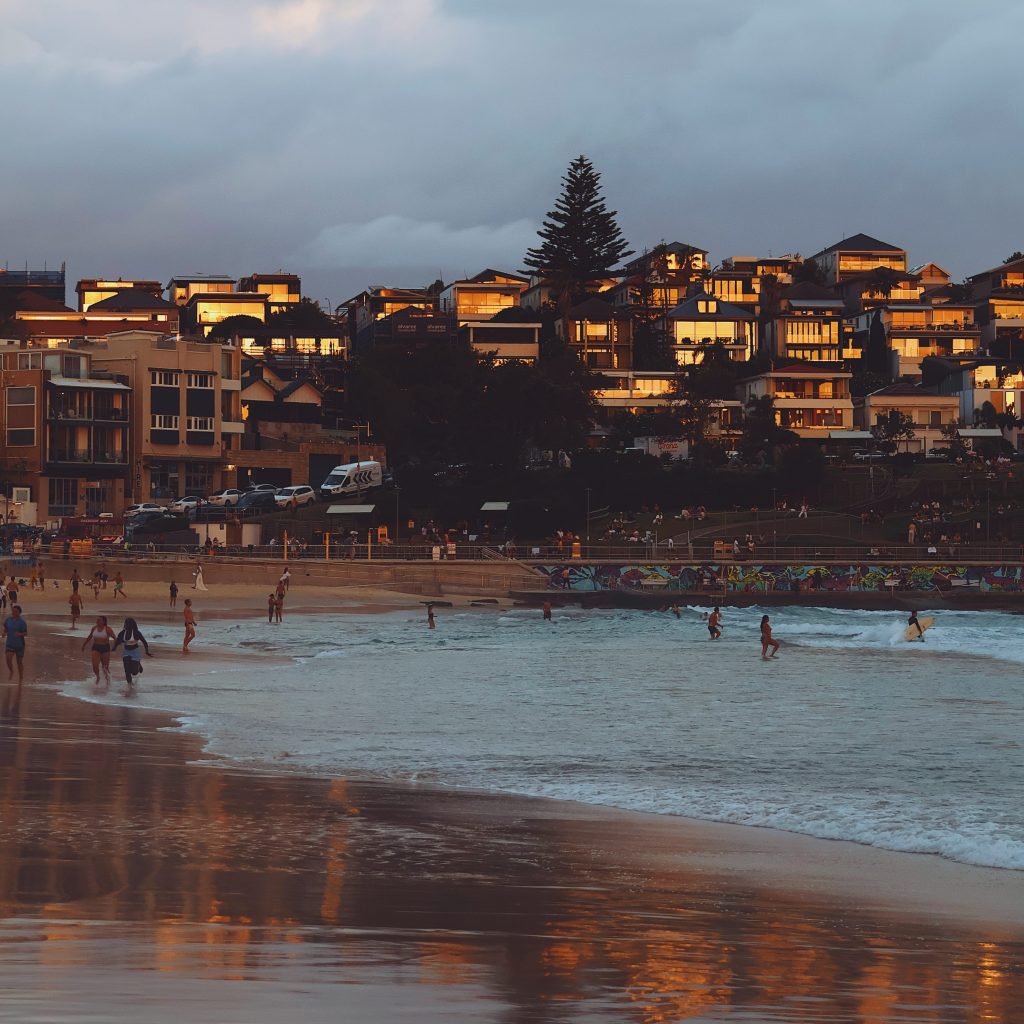
Public space sits at the cornerstone of most societies, offering places in which communities can convene, express themselves, and simply exist, whether it be through recreational activities or a relaxing evening at the beach. Other public spaces provide utilitarian functions, like transport corridors or public housing. Although, here in Sydney, these spaces have often been shaped by efforts dating back to the time of settler-colonialism. Ever since the First Fleet in 1788 arrived in Sydney Cove (Riley 2019), land had continuously been exploited and seized from Aboriginal people in order to serve the needs of the colonists. These actions of dispossession still influence Sydney’s built environment. Today, we can see urban renewal efforts have come with the displacement of existing residents, via the privatization of public assets. This raises the question of who public space is truly meant for. Aboriginal communities in Sydney have been at the forefront of the fight for preservation of public lands, yet other groups such as middle and low-income residents are being left behind as well in the transformation of Sydney’s ever changing landscape. As colonial legacies are being confronted by institutions such as the Local Aboriginal Land Councils who champion broader community-led planning initiatives, the reimagination of public space as truly public, accessible, and influenced by those who exist amongst these spaces is becoming a reality.
Colonial Legacies as Modern Frameworks
The colonial perception of land as a commodity to be owned, sectioned, and harnessed still permeates within Sydney’s urban development process to this day. As Brenna Bhandar argues in Colonial Lives of Property, “If the possession of land was (and remains) the ultimate objective of colonial power, then property law is the primary means of realizing this desire” (Bhandar 2018). Property law not only facilitated settlement in Australia; it was the pure justification that enabled the dispossession of Aboriginal peoples. Property law had been reinforced by Terra Nullius, the dogma that land belonged to no one. This idea paved the way for the British Crown to issue land grants for private ownership on inhabited land. As Dallas Rogers et al. articulate in Understanding Urbanism, Terra Nullius garnered much success seeing that land became conceptualized as unused or ‘unimproved’, deepening the justification of dispossession to fit the European notions around land utilization (Rogers 2020). These new frameworks swept in exclusion, displacement from Country, and the commodification of land into the fold, displacing long standing Aboriginal practices of stewardship which saw the land as a common, relational good. These colonial norms have been imprinted on how contemporary space should be governed and imagined across Australia. The perception of land as a shared resource vanished as settlers built up Sydney to fit their ideals, entrenching property ownership and exclusion into the foundation of the harbour city.
Exclusion by the Shore
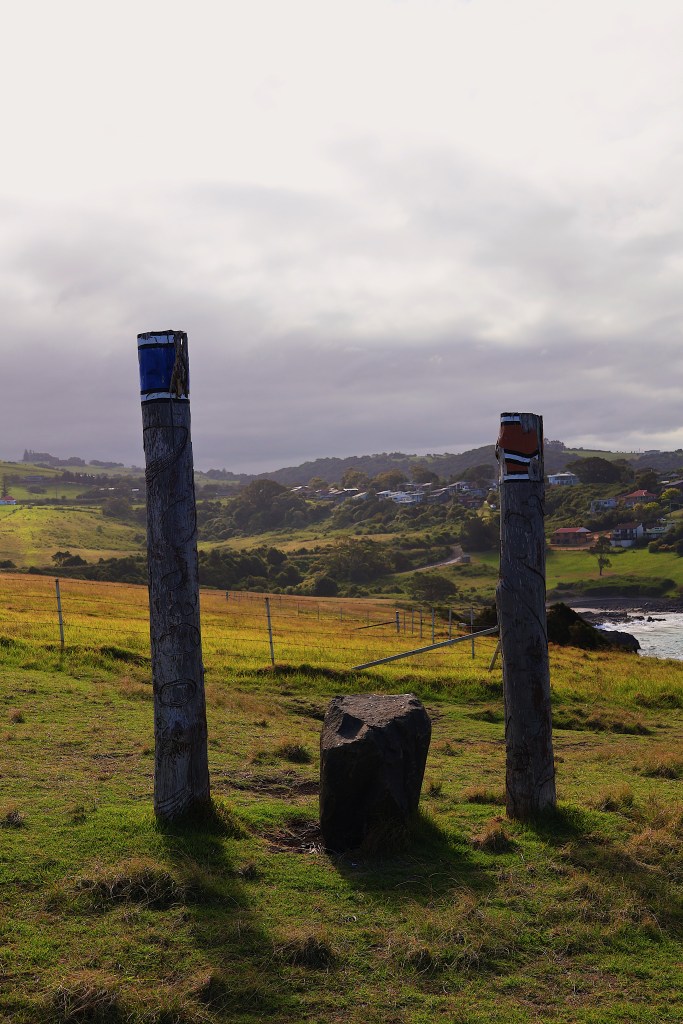
Even when Aboriginal people have often been at the forefront of the land rights movement, exclusion and displacement not solely has a bearing on their communities; other populations have been subjected to similar obstacles. One significant case is the historical barriers local residents experienced along Sydney’s eastern beaches between both Bondi and Coogee. In the early 1800s these beaches were not seen as public recreational spaces, but as land with either residential or utilitarian purposes including navigational, militaristic, and resource extractions. The Department of Lands had issued that the foreshores within 100 feet of the highwater mark be reserved; this mandate gave preference to adjoining property owners, reinforcing the idea in which these lands should be privately captured rather than serve a common good for all. Local coastal councils such as Randwick and Waverley took a stand against existing privatization via constructing roads that granted greater access to the beaches to enhance recreational use. Yet, the colonial government during this period had discredited the actions taken by the councils by stating “these reservations of 100 feet from high water mark were clearly not made for any Municipal purposes’ or for public recreation” (Ford 2010), reiterating that public access is not considerable to the general interest of the public. These attitudes were met with public pushback and petitions. The government reinforced their commitment to privatization in one instance when they sided “with the demands of the owner of Bondi Estate to retain ownership of the beach” (Ford 2010). Eventually, in the late 1800s, the New South Wales Government made the great leap of purchasing the Bronte Estate and Bondi Beach, fundamentally shifting beach usage away from zones of private ownership; the outcome “represented the first recognition by the colonial government that there was ‘some great public purpose’ in providing multiple large coastal recreation spaces close to Sydney” (Ford 2010). This was a massive win in the advancement of promoting public space. Yet, a new force to be reckoned with carved out the eastern beaches.
The early 20th century witnessed a surge in visitation. More people seeking out relaxation and recreation along the coasts gave way to a new window of opportunity for an alternative form of privatization in the area. It materialized when private commercial enterprises established aquariums and amusement parks adjoining the beaches. A clash occurred at Tamarama beach, when the Royal Aquarium Company had “illegally erected a fence which stopped public access to the beach; and secondly, the RAC had illegally erected an engine house on the Crown foreshore reserve” (Ford 2009). Despite these two actions being done so illegally, the government issued a special lease that accommodated the Royal Aquarium Company and displayed commitment by the governments towards a private endeavor which placed limitations upon public access. These aquariums and amusement parks charged for admission, making them inaccessible to lower and middle-class residents. Seeing the beach itself remained free, it held on to its appeal for a broad range of socioeconomic statuses. The commercialized aquariums and amusement parks eventually lost their luster and closed up shop, leaving the accessible beaches as the remaining appeal for leisure and recreation.
Commodification of our Streets

Contemporary infrastructure projects, such as the Cross City Tunnel, demonstrate how perceived public goods remain influenced by exclusionary practices and misaligned interests of the government. The Cross City Tunnel boasted a hefty price tag, amounting to an $800 million project, which has failed to meet “the forecast traffic levels of 90,000 vehicles per day” (Phibbs 2008). Frustration surrounding the tunnel emerged due to two reasons, high tolls and road closures. The city strategically blocked access to seventy-three roads in order to funnel traffic through the Cross City Tunnel upon its opening; resentment towards the tunnel and government grew amongst residents as they felt the city was giving preference to the tunnel instead of utilizing existing motorways. The steep tolls, set to $3.56 per use (Phibbs 2008), acted as a barrier to many potential users, putting use out of reach for many who couldn’t or weren’t willing to pay the fee. The project, spearheaded by the Roads and Traffic Authority, outsourced the development to private enterprises which helped in the scaling up of the Cross City Tunnel, unfortunately at the disregard for alternative investment into “public transport improvements or smaller-scale government-funded localized road improvements” (Haughton and McManus 2011). The outcome created a gap in access to preexisting public infrastructure and set up barriers for those unwilling to front the cost of commuting. Ultimately, as the Treasurer at the time described the aim of the project being “at ‘no net cost to government’”, the interests of the government were prioritized, resulting in an unpurposeful infrastructure scheme that neglects, at the cost of the greater public’s needs.
Flickers of Progress in Redfern and Waterloo
The Redfern and Waterloo neighborhoods have been places of historical removal and exclusion, particularly in the form of public housing. For multiple decades, these neighborhoods have had a reputation for being less desirable due to “an absence of State urban upgrading of the district” (Rauscher and Momtaz 2015). Eventually by the 1960s and 1970s, a greater number of Aboriginal folks relocated to Redfern; in turn, “Redfern witnessed the creation of key Indigenous related services, such as the Aboriginal legal, medical and housing services” (Rauscher and Momtaz 2015). The initiative not only met a necessary demand in the area, but also generated a sense of belonging and resilient support networks. These services established the inner-city Sydney region as a magnet for marginalized populations, specifically Aboriginal residents, who wanted to establish a space of self-determination (AIATSIS 2020).
Regardless of these advancements amongst the Aboriginal community, Redfern and Waterloo became a site of resistance against further privatization of homes, commercialization, and upscaling of existing properties by large developers. Not only were public spaces at risk of privatization, but avenues for community input simultaneously narrowed. As Kurt Iveson notes in Building a City For “The People”: The Politics of Alliance-Building in the Sydney Green Ban Movement, “developers, planning authorities and politicians had failed to seek the approval of ‘the people’ for a range of developments across the city.” This exclusion resulted in acts of resistance, most notable were the green bans, led by the Builders Labourers Federation in Waterloo and Redfern; green bans halted the development of new projects by refusing to demolish heritage buildings or construct new modernist buildings (Rogers and Wynne 2020), which became reflective of a people-centered approach to urban planning. Other efforts through grassroots organizing within the community placed pressure upon governing bodies (Burgmann and Burgmann 2011). A landmark success occurred when “the government bought 41 houses on a block of land in Redfern that would become known as ‘The Block,’” marking a land rights milestone. Furthermore, the land claim established the public housing to fall under the management of the Aboriginal Housing Company. However, the reality of publicly accessible Aboriginal housing in Redfern and Waterloo unraveled. By 2011, The Block was entirely demolished, resulting in the displacement and relocation of Aboriginal residents (Hromek 2016). Coupled with a majority, around 70%, of new developments in Waterloo having been private market housing (Rogers and Wynne 2020), these examples serve as a stark reminder of the prevailing struggle over the right to land and public space amongst one of Sydney’s most disadvantaged communities.
Building Belonging through Aboriginal Voices

In their struggle to counter the encroachment upon public spaces, Local Aboriginal Land Councils have displayed their ability to block privatization and exclusionary development projects across Sydney. Conceptualized under the NSW Aboriginal Land Rights Act in 1983 (Murray 2024), the Local Aboriginal Land Councils are not only symbolic, but rather vehicles for achieving the reclamation of Crown lands, an act of dismantling colonial legacies. The goal of these claims is to utilize the space to “help achieve positive social, economic, cultural and environmental outcomes for communities” (NSW Government, Negotiated Outcomes), which differentiates the councils’ mission from profit-motivated developers as exemplified by the Cross City Tunnel, which disregarded the needs of the public and placed limitations on access.
The land councils now hold massive parcels of land, allowing them to reconfigure Sydney’s urban structure in ways that place social and economic needs at the forefront of addressing community issues, environmental stewardship, and respect for Country around infrastructure and housing matters (Baltman 2023). Additionally, the aims of the Local Aboriginal Land Councils are rooted in community ownership, environmental stewardship, and respect for Country. Yet, systemic barriers still exist in making those aspirations a reality: obstacles such as existing zoning laws, lengthy delays in land claim processing, misaligned interests between various stakeholders, and insufficient funds to cover expenses. Despite prevailing roadblocks, alternative entities like the Aboriginal Housing Company have pushed through an ambitious scheme, the Pemulwuy Project. The objective of the project is to revitalize The Block in Redfern. By completion, they will have constructed affordable housing options for 62 Aboriginal families. In addition, expansive public goods will include “a gymnasium, commercial and retail space, a gallery, student accommodation, and childcare centre” (NSW Government, Pemulwuy Project). While challenges are still present, the achieved gains will curb the impact of displacement and exclusion. The Pemulwuy Project exemplifies an Aboriginal-led movement in the heart of Redfern to take ownership over public space to create places of belonging and cultural enrichment, through a community-driven approach.
Conclusion
Public spaces across the city of Sydney have been home to a long slew of competing interests, between private enterprise and the wants and needs of the local inhabitants. Dating back to the earliest occupation of Sydney by colonial powers, from the control and capture of beaches like Bondi and Tamarama to contemporary infrastructure projects such as the Cross City Tunnel, the privatization of these lands has weighed not only on who has access, but how land is used and imagined. Coastlines once enclosed to serve the interests of private owners and profit-driven endeavors eventually became public via continuous pressure by the community and civic action, exhibiting that reclaiming space has been possible in the past. Now, the same rationale is applicable in disadvantaged, inner-city neighbourhoods like Waterloo and Redfern, as Aboriginal-centered organizations resist modern-day efforts of exclusion. The Pemulwuy Project, coupled with the land claims achieved by the Local Aboriginal Land Councils, provides optimism that for-profit urban development can be rejected, instead proving models entrenched in place-based development, cultivating belonging through cultural enrichment, and self-determination of residents can be made possible. Zoning laws, construction delays, and lack of capital may persist; these obstacles are not inherent, but rather recognizable as a political choice in preferring privatization over the needs of a community. If Sydney seeks to keep public space truly public, it requires the continuation of collective initiatives that demand remediation of current forms of exclusion and the reconfiguration of our urban planning process that puts the people who use and live in these spaces at the helm.
References
AIATSIS (2020) Redfern – the untold story of 1970s Aboriginal activism and resurgence. aiatsis.gov.au.
Baltman, N. (2023) ‘Why is it so hard for Local Aboriginal Land Councils to develop land when the public needs are huge?’, Western Sydney University Institute for Culture and Society.
Bhandar, B. (2018) Colonial lives of property: Law, land, and racial regimes of ownership. Durham, NC: Duke University Press.
Burgmann, M. and Burgmann, V. (2011) ‘Green Bans movement’, The Dictionary of Sydney. dictionaryofsydney.org.
Ford, C. (2009) ‘A summer fling: the rise and fall of aquariums and fun parks on Sydney’s ocean coast 1885–1920’, Journal of Tourism History, 1(2), pp. 95–112. doi:10.1080/17551820903353454.
Ford, C. (2010) ‘The battle for public rights to private spaces on Sydney’s ocean beaches, 1854–1920s’, Australian Historical Studies, 21(3), pp. 253–268. doi:10.1080/1031461X.2010.493946.
Haughton, G. and McManus, P. (2011) ‘Neoliberal experiments with urban infrastructure: The Cross City Tunnel, Sydney’, International Journal of Urban and Regional Research, 36(1), pp. 90–105. doi:10.1111/j.1468-2427.2011.01019.x.
Hromek, M. (2016) ‘Iconic Redfern: The creation and disintegration of an urban Aboriginal icon’, 13th Australasian Urban History Planning History Conference. doi:10.25916/5c26ae5c1cbee.
Iveson, K. (2013) ‘Building a city for “the people”: The politics of alliance-building in the Sydney Green Ban Movement’, Antipode, 46(4), pp. 992–1013. doi:10.1111/anti.12047.
McRae, Tommy (c. 1880s–1890s) Spearing the kangaroo. Pen and brown ink on buff paper. Art Gallery of New South Wales, 210.2004. artgallery.nsw.gov.au.
Murray, A. (2024) Press release. Metropolitan Local Aboriginal Land Council.
NSW Government (n.d.) Negotiated outcomes, Crown Lands. crownland.nsw.gov.au.
NSW Government (n.d.) The Pemulwuy Project, Planning. planning.nsw.gov.au.
Phibbs, P. (2008) ‘Driving alone: Sydney’s Cross City Tunnel’, Built Environment, 34(3), pp. 364–374. jstor.org/stable/23289790.
Rauscher, R.C. and Momtaz, S. (2015) Sustainable neighbourhoods in Australia: City of Sydney urban planning. Cham: Springer. doi:10.1007/978-3-319-17572-0.
Riley, M. (2019) ‘The convicts’ colony’, Museums of History NSW. mhnsw.au.
Rogers, D., Keane, A., Alizadeh, T. and Nelson, J. (eds.) (2020) Understanding urbanism. Singapore: Springer Nature.
Wynne, L. and Rogers, D. (2020) ‘Emplaced displacement and public housing redevelopment: From physical displacement to social, cultural, and economic replacement’, Housing Policy Debate, 31(3–5), pp. 395–410. doi:10.1080/10511482.2020.1772337.
University of Sydney, May 2025. AI was used to help establish the structure of the essay and to assess clarity, coherence, spelling, and grammar, as disclosed at the time.

